




Being Still - The Power of Pure Silence as a High-Quality Wellness Habit
Think about the last time you were truly still. Not “quiet-ish” with a podcast in one ear. Not “resting” while your thumb scrolls. Actual stillness - no radio, phone off, just pure silence.
You’ve probably seen or heard a version of this online - someone leaves the house and just… walks. No playlist, no call, just them and the world around them. "Silent walking" is a being talked about everywhere right now (BBC Sounds Radio 4 - Amanda Owen, Curious Incidents, Brain Rest and the Inheritance Tracks of Mika) .
But let’s widen the frame. It isn’t only about walking. It’s about being still on purpose and letting complete silence do what it does best: reset you.
And here’s why it matters for a busy life (and for anyone curating wellness for customers). Stillness is a high-quality habit. It’s simple. It’s accessible. And it doesn’t add one more task to the to-do list.
Why Pure Silence Feels Like a Luxury (But Shouldn't Be)
Think about your average day. The alarm goes off. You check your phone. Background music while you get ready. A podcast on the commute. Notifications pinging throughout work hours. TV on while you cook dinner.
When was the last time you experienced complete silence?
Not “low volume.”
Not “calm music.”
Not “a guided meditation talking you through it.”
Just stillness. No radio. Phone off. Pure silence.
For most of us, silence has become almost uncomfortable.
We fill every gap with noise because being still feels… empty. Unproductive. Maybe even a bit awkward
But research tells a different story.
A 2021 study (Cambridge University Press) found that people performing tasks in complete silence experienced the lowest stress levels and cognitive load compared to those working with speech or background noise. Just two minutes of silence produced greater relaxation effects than listening to soothing music. Two minutes.

Even more fascinating? Duke University researchers (PubMed study) discovered that two hours of silence per day prompted cell development in the hippocampus - that's the part of your brain responsible for memory formation. Your brain literally grows in the quiet.
Silence isn't empty. It's full of answers we can't hear over all the noise.
The Stillness Shift (Silent Walking is Just One Doorway)
So why is silent walking specifically catching on? Because it gives busy people a rare combo - movement on the outside, stillness on the inside. And it’s an easy doorway into something deeper - moments of complete silence that don’t require special skills.
When you walk without input - no earbuds, no distractions - something shifts. You notice things. The way light falls through trees. The rhythm of your own footsteps. That slight tension in your shoulders you didn't realise you were hold. And you can bring the same "no-input" stillness into everyday moments too. Sitting in the car before you start the engine. Making tea without a screen. Standing at a window and simply breathing.
A good example is the book The Brain at Rest: How the Art and Science of Doing Nothing Can Improve Your Life

The big idea is simple - when you stop feeding your brain constant input, it can reset, sort, and recover. Quiet “no-task” time supports better focus, mood, and long-term brain health.
Stillness can look like “doing nothing”; that’s not lazy, it’s science-backed.
This is what being present actually looks like. Not a complicated practice. Not an expensive retreat. Just you, right where you are, paying attention.
And the wellbeing benefits stack up quickly:
- Lower cortisol levels (your stress hormone takes a holiday)
- Reduced blood pressure and heart rate
- Better sleep quality when practiced regularly
- Improved memory recall - one study showed recall rates jumped from 14% to 49% after quiet rest
- More creativity as your brain gets space to wander and wonder
The beautiful part? You don't need to carve out extra time. You just change how you use the time you've already got.
Small Pockets of Quiet, Big Shifts in Quality
Here's where it gets interesting for anyone thinking about wellness from a retail perspective.
Customers aren't just buying products anymore. They're buying permission. Permission to slow down. Permission to prioritise themselves. Permission to make quality - not quantity - the measure of a good life. Silent moments represent exactly this shift. They're free, they're accessible and they work.
But people still need reminders, prompts, gentle nudges that say ...this matters - take the pause.
This is why illustrated wisdom resonates so deeply right now.
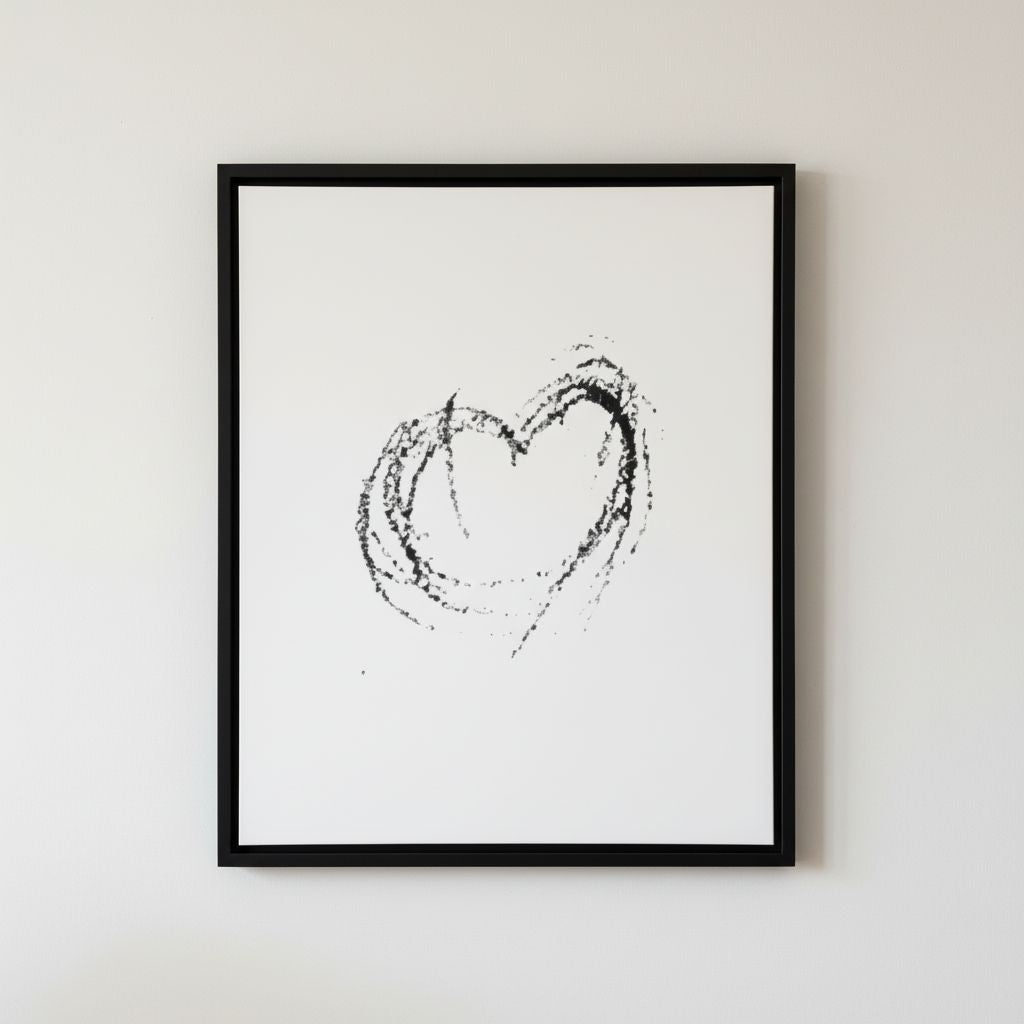
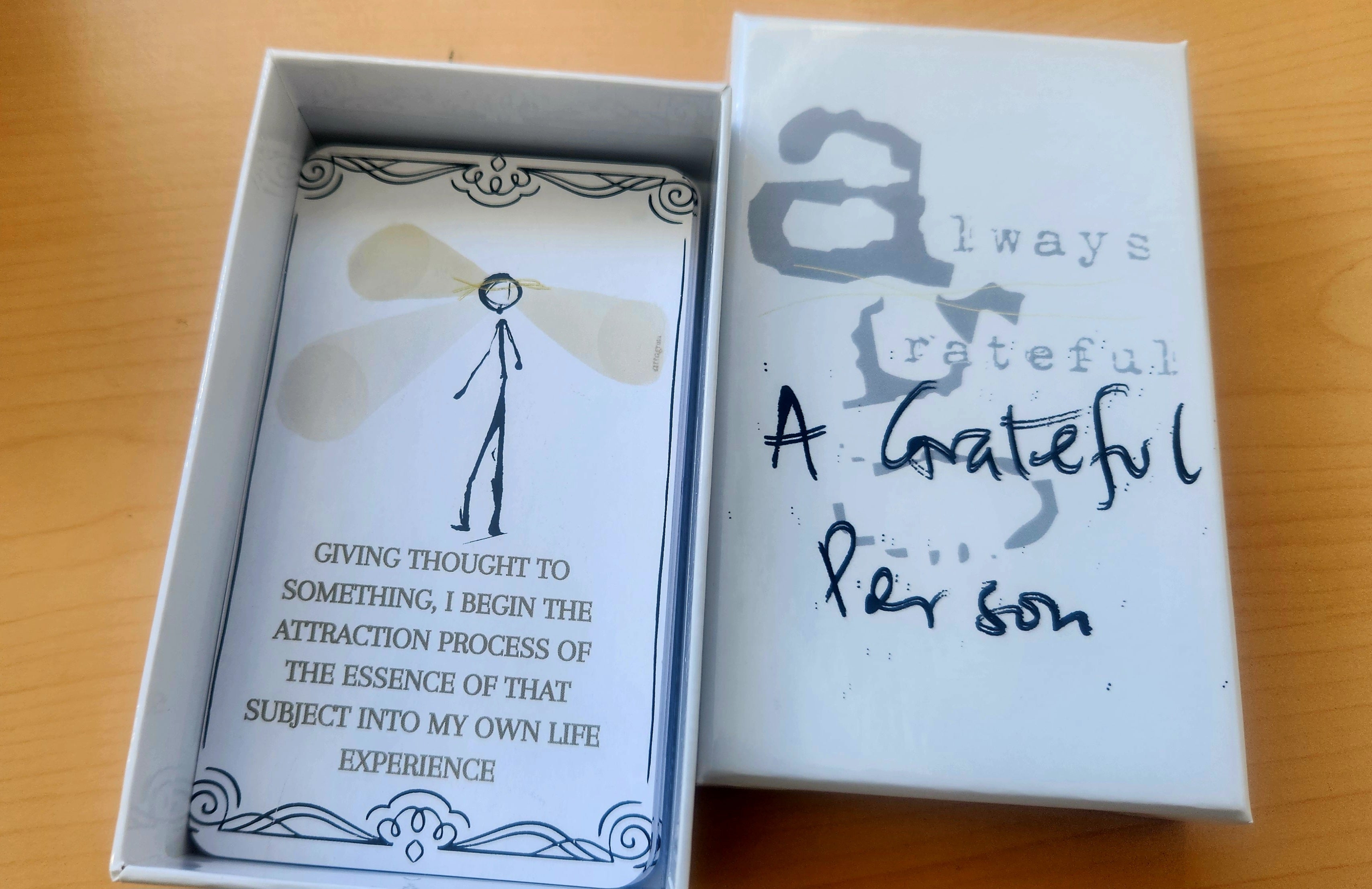
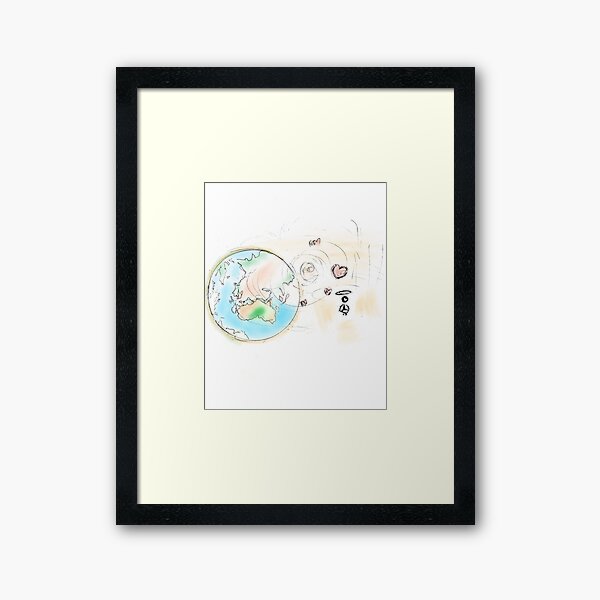
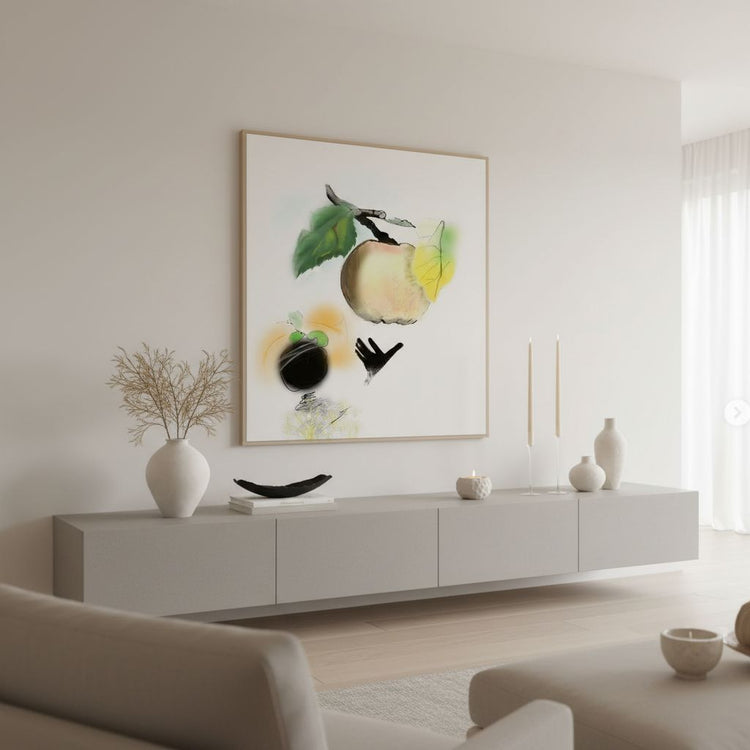
A simple print on someone's wall or a tea cup. A card on their desk. Visual cues that interrupt the noise without adding to it.
 Our Work-break-Reset gift set - a good moment to practice silence
At Attagrata, we think of these as quiet invitations. Not loud demands to be mindful or preachy reminders to be grateful. Just soft, beautiful prompts that meet people where they are.
Because sometimes what we need isn't more information. It's a single image or phrase that stops us mid-scroll and whispers: breathe.
How to Start - Try the Attagrata S.T.I.L.L Framework
Want to introduce “being still” into your routine (or help your customers do the same)?
Try this simple approach built for busy days:
S : Switch everything off.
No radio. Phone off. No “just in case” checking. Make it real silence.
T : Take two minutes.
Start tiny. Two minutes in the car. Two minutes at your desk. Two minutes before you sleep.
I : Invite what shows up.
Thoughts, body sensations, emotions. Let them arrive without grabbing the steering wheel.
L : Let the moment be plain.
No fixing. No productivity. Just the clean simplicity of being here.
L : Link it to something you already do.
Tea kettle on? Be still while it boils. Walking to the shop? Walk in silence. Brushing teeth? Two minutes, done.

The goal isn't perfection. It's progress. Even three minutes of intentional quiet changes your baseline.
Creating Space for What Matters
What's remarkable about the silent moments movement is how democratic it is.
You don't need a gym membership. You don't need special equipment. You don't need to block out an hour of your day.
You just need to stop filling the gaps.
This is taking steps toward total wellbeing in the most literal sense. One quiet walk. One undistracted cup of tea. One moment of looking out the window instead of at a screen.
Hospitals have started implementing noise reduction protocols because they've seen the data: quieter spaces lead to better sleep, lower stress, and improved healing. If silence works in high-pressure medical environments, imagine what it can do for everyday life.
And this is exactly where products that support presence become valuable. Not products that add complexity, but ones that create visual permission to pause. Art that says your next pause matters. Prints that remind us we're becoming something new every single day.

Be More Present - get emails over seven days encouraging you to be more present
The Retail Opportunity in Stillness
For those curating wellness products for customers, here's the honest truth: people are overwhelmed. They're tired of complicated routines and expensive solutions that promise transformation but deliver guilt.
What sells now is simplicity. Accessibility.
The feeling that self-care doesn't have to be another item on the to-do list.

Silent moments fit perfectly into this landscape. And products that support this movement - gentle reminders, beautiful prompts, little bits of wisdom that interrupt the chaos, speak directly to what customers actually need. Not more noise, or more demands, but quiet invitations to be exactly where they are.
Your Invitation
So here's a gentle challenge.
Tomorrow morning, try it.
Walk without the podcast.
Drink your coffee without scrolling.
Sit in the car for sixty seconds before you turn on the radio.
Notice what surfaces when you stop filling the silence
Maybe it's nothing dramatic. Maybe it's just a small exhale you didn't know you needed. That's enough; that, is actually everything.
Wellness isn't built in grand gestures, it's built-in moments of grateful attention, in choosing quality over quantity, in remembering that presence isn't something you achieve, it's something you practice - one quiet moment at a time.


